


Bladder cancer is a prevalent disease with low survival rates. A major limitation of current therapeutic approaches is the lack of spatiotemporal control of drugs; chemotherapy can also affect healthy tissues, causing toxic effects in patients and reducing the dose that can be used. Photopharmacology is an emerging field that seeks to precisely control the effect of drugs using external light. OncoLight proposes that these light-sensitive molecules can be used to eliminate bladder cancer cells with high precision under external light control. To establish a proof of concept, we developed light-sensitive molecules for three different target proteins.
We developed new synthetic methodologies and will establish new enzymatic assays and, if successful, these results will support the use of photosensitive drugs to treat bladder cancer in a much safer and more effective way than current therapeutic options.
Línea de investigación Archives
Metagenomic and enzymatic innovation for new marine litter recycling solutions

OCEANZYME proposes an innovative biotechnological solution for the recovery of marine litter, from its identification to its recycling using enzymes. Through passive fishing campaigns in critical areas of the Atlantic and the Mediterranean, plastic waste will be collected and characterized to analyze its associated microbial communities using metagenomics. Enzymes with degrading potential will be identified, modeled, produced, and tested. Furthermore, the application of the resulting products in sectors such as fisheries and aquaculture will be explored. The project promotes the circular economy, the protection of the marine environment, and technology transfer, combining them with a solid communication and outreach strategy.
Neoteric formulations with stimulus-responsive phase transitions
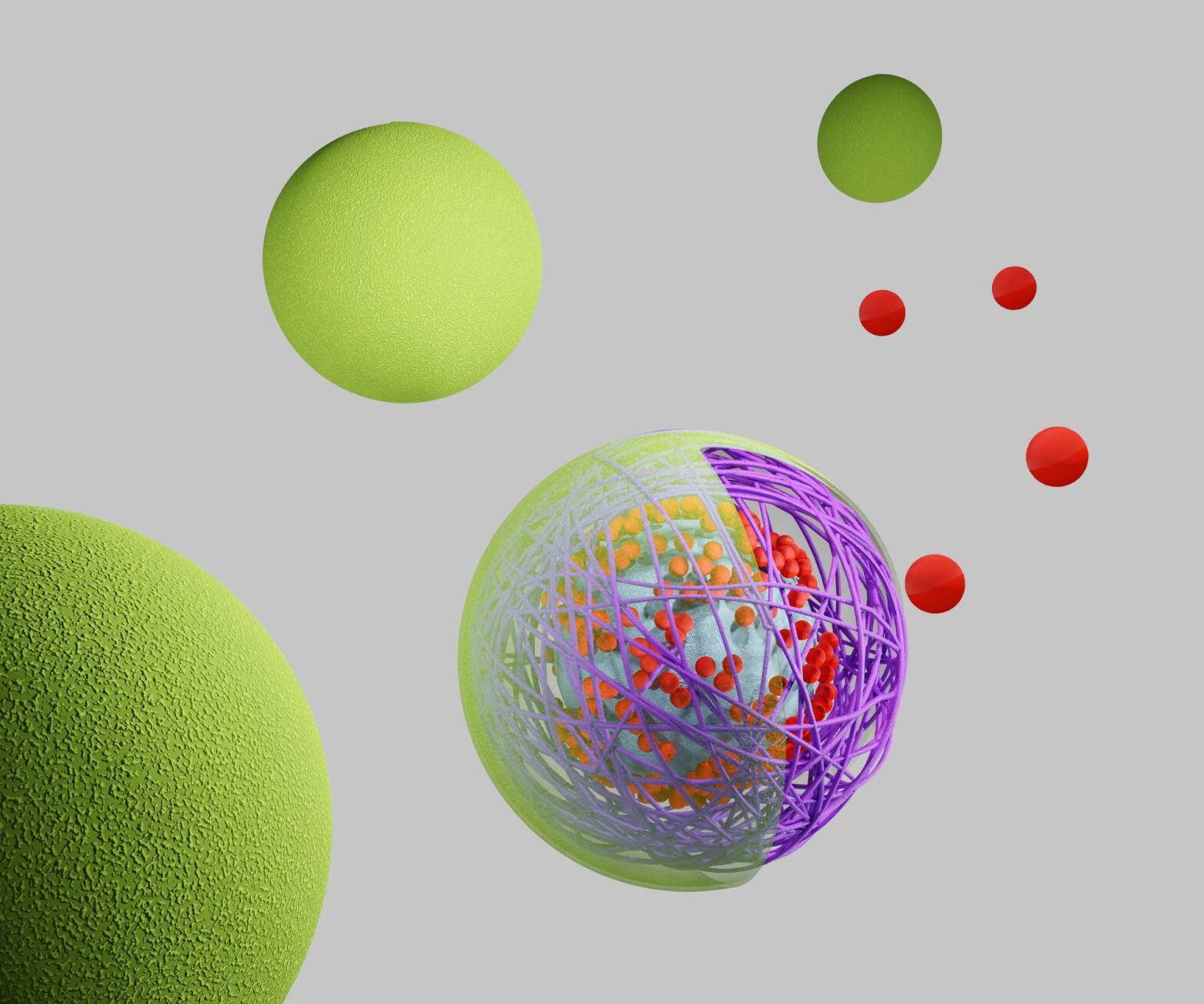
Phase transitions in materials formed by surfactants and polymers are determined by physicochemical parameters that can be considered external stimuli. This project will focus on new formulations for in situ-forming long-acting drug delivery systems (LADDS). These systems will be designed to transition from injectable fluid solutions to highly viscous systems with solubilising capacity, such as liquid crystals, water-in-water emulsions and wormlike micelles, under conditions that mimic in vivo environments (dilution, pH, temperature and biomolecule concentration). A comprehensive physicochemical, structural and rheological characterisation of a wide variety of formulations will be carried out. In addition, nanomaterials with photothermal and magnetic responses, as well as functional organic nanoparticles, will be integrated to enable greater control over rheological properties and drug release.
Geometry and drug release in supramolecular polymer delivery: study using advanced optical microscopy in a prostate cancer-on-a-chip

NANOSHAPE focuses on the development and evaluation of nanofibres for cancer drug delivery. Novel nanomaterials, such as nanofibres, will be used for their unique shape, modularity, flexibility and responsiveness. Nanofibres could improve drug delivery for cancer treatment, particularly in terms of increased selectivity and overcoming biological barriers. Advanced optical microscopy techniques will be employed to assess the performance of the nanomaterials, emphasising the need for robust characterisation at the single-particle level. NANOSHAPE will address the importance of understanding the behaviour of nanomedicines in complex biological environments by using more realistic in vitro models, such as organ-on-a-chip technology, to study their transport across different barriers. In addition, NANOSHAPE will explore strategies for drug loading and release, including incorporating anticancer drugs into nanofibres and using stimulus-responsive mechanisms for controlled drug release.
Hydrolipidic Gel as a Substitute Material for the Acid Mantle in Skin Pathologies

The skin acts as a protective barrier thanks, among other elements, to the acid mantle, a thin hydrolipidic film located in the stratum corneum that prevents dehydration, protects against infections, and maintains skin balance. In diseases such as atopic dermatitis or ichthyosis, this mantle is altered or absent, contributing to the development and chronification of the disease. Currently, there are no materials capable of replacing it, and available treatments are mainly symptomatic and not very effective. This project proposes to develop a biomimetic material based on a nanostructured hydrolipidic gel capable of imitating the acid mantle and restoring the functionality of diseased skin. The project will combine physicochemical and biomedical studies, including material characterization, lipid analysis of healthy and diseased skin, and in vitro and in vivo evaluation of its therapeutic efficacy.
Machine Learning and Artificial Intelligence for Nanomedicine Optimization

MELINA drives an AI platform in nanomedicine that combines curated data, standardized experimental workflows, and advanced machine learning models to optimize therapeutic nanoparticles. The project integrates information on nanoparticle synthesis, physicochemical characterization, and biological evaluation in cellular models to identify which variables most influence efficacy and safety. It also incorporates high-throughput methods, image analysis, and Quality by Design strategies to guide the development of new formulations in a more systematic and reproducible manner. By reducing trial-and-error and sharing data and tools openly, MELINA aims to accelerate innovation in nanomedicine and strengthen translational research.
Multivalent chemical systems as therapeutic agents for the treatment of cancer and movement-associated diseases

The MCS-CANMOVE project aims to develop two new therapeutic agents: bivalent ligands for the treatment of movement disorders, such as levodopa-induced dyskinesia (LID) and restless legs syndrome (RLS), and drug delivery systems for the treatment of cancers, such as metastatic colorectal cancer (mCRC) and triple-negative breast cancer (TNBC). In both cases, a controlled multivalent strategy will be employed to improve selectivity and efficacy. LID and RLS are clinically challenging to treat, and current therapeutic solutions present undesirable side effects. Bivalent ligands will selectively and simultaneously modulate receptor dimers involved in the development of these diseases, thereby minimizing side effects. TNBC and mCRC share characteristics such as poor prognosis, metastasis, and chemoresistance. The proposed drug delivery systems are designed to selectively eradicate tumors and cancer stem cells, creating more effective therapies with fewer side effects.
Edible microalgae for maintaining energy homeostasis. Application to diet-induced metabolic syndrome, physical exercise, and hypoxia

The mALGAHEALTH project provides scientific evidence on the efficacy of the combined action of the microalga Chlorella vulgaris and omega-3 fatty acids (EPA/DHA 1:2) in rat stress models. The mixture studied:
- Modifies the intestinal microbiota and its metabolites in the short, medium, and long term, both in healthy individuals and in animals exposed to physiological stress.
- Does not modify the physiological parameters affected by acute exposure to simulated altitude.
- Induces changes at the level of skeletal muscle fibers, as well as in the functionality of their mitochondria, in an animal model of physical exercise.
- Attenuates the alteration of the glycemic response in an animal model of prediabetes induced by a diet high in saturated fat.
The results provide scientific evidence for the use of microalgae as functional foods for the prevention of diabetes, obesity, and the promotion of physical exercise.
Chemical biology tools for the synthesis and study of post-translationally lipid-modified proteins

Lipid attachment is a powerful mechanism for modulating protein behaviour and regulating signalling and disease-related processes, although the molecular consequences of many lipid modifications remain poorly understood. This project will focus on developing chemical and biological tools to study lipid-modified proteins, with particular emphasis on Hedgehog proteins, which are cholesterol-linked at the C-terminus, and S-acylated proteins, in which fatty acids are reversibly attached to cysteine residues. To achieve these aims, we will develop new methods for protein synthesis and peptide ligation, and combine probe design with mass spectrometry-based analyses to study lipidated proteins and the enzymes involved in their metabolism, including proteins associated with rare paediatric neurodegenerative diseases.
Lipid replacement therapy for patients with congenital ichthyosis using nanostructured topical delivery systems of acylceramides.

Hereditary ichthyoses are rare genetic diseases (13.3 cases per million in Europe) that appear at birth or in early childhood, causing scaling, skin thickening, dryness, itching, and pain. Approximately half of the patients, especially those with Autosomal Recessive Congenital Ichthyosis (ARCI), present a defect in the synthesis of CerEOS, a ceramide essential for the epidermal barrier. Current treatments are only symptomatic and not very effective. The LIPARCI II project develops a lipid replacement therapy based on CerEOS encapsulated in biomimetic nanoparticles, capable of restoring the skin barrier in preclinical ARCI models. Additionally, LIPARCI II includes a phase 0 clinical trial to evaluate bioavailability, will advance large-scale production, and will develop new models and formulations to expand the number of beneficiary patients.