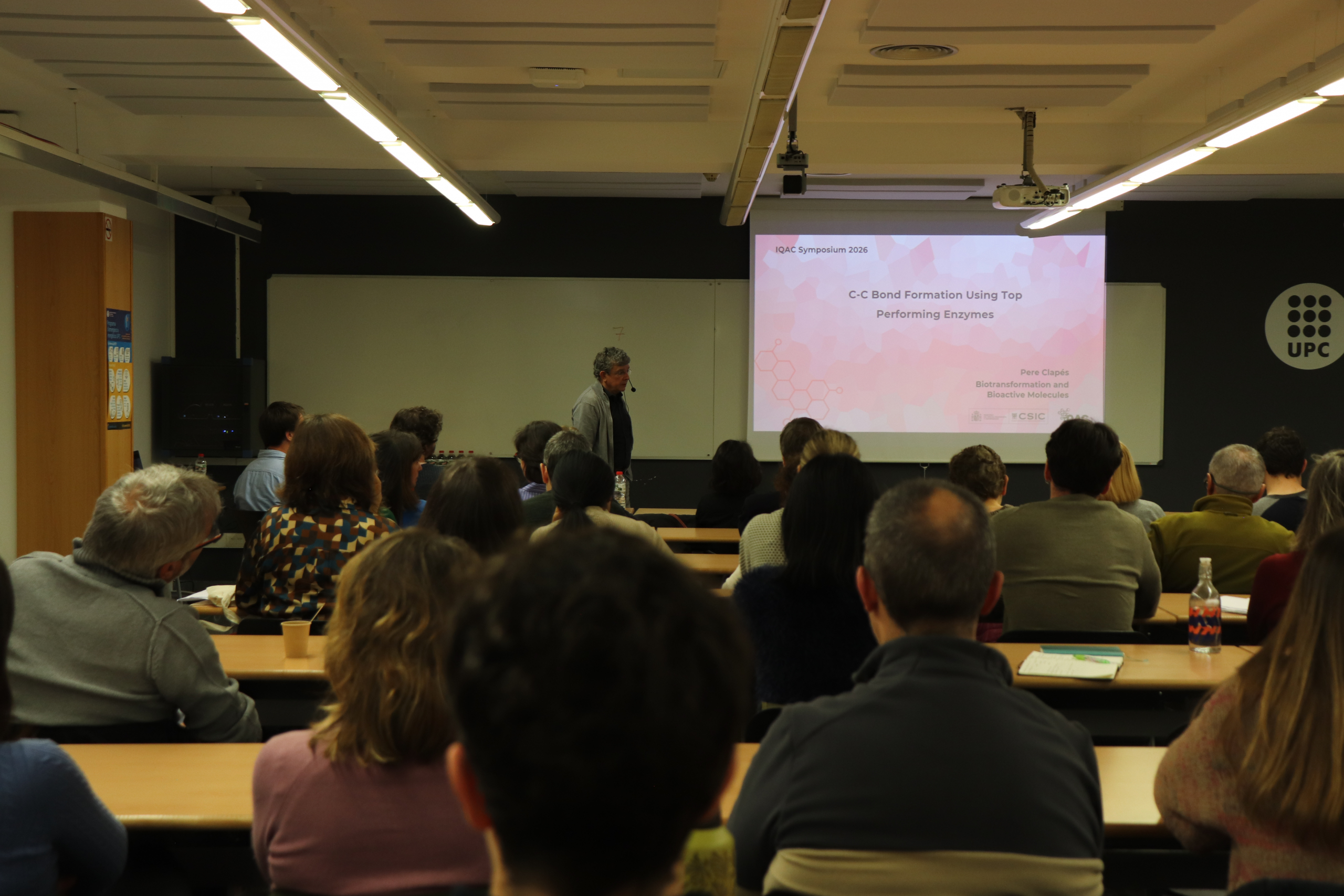
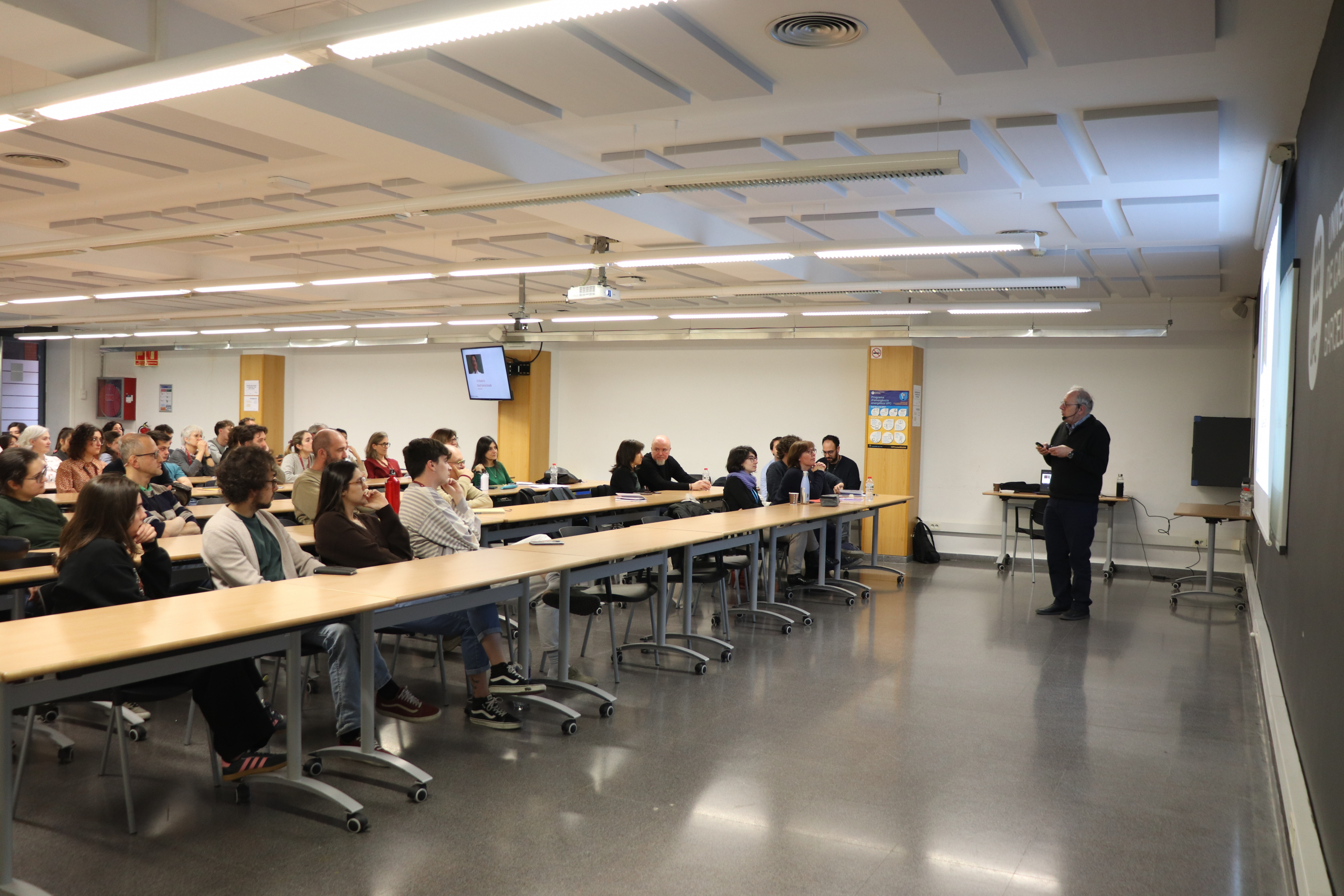
The 2026 edition of the IQAC Annual Symposium brought together 110 people from all the research groups and services. During the event, the scientific projects finished in 2025 were presented for all the IQAC personnel.
The Symposium began with the presentation of the researcher Josep Lluís Torres, from the Biotransformation and Bioactive Molecules group, who talked about the benefits of microalgae as an anti-inflammatory and diabetes prevention tool, studying it with female mice.
Then, the USiBAP researchers Isabel Haro and Mª José Gómara presented their research with synthetic peptides for the diagnosis and therapy of the rheumatoid arthritis.
Pere Clapés (Biotransformation and Bioactive Molecules) talked about the development and optimization of top-performing enzymes for carbon–carbon (C–C) bond formation, enabling more precise, efficient, and environmentally friendly chemical synthesis.
The researcher Alexandr Shafir, from the Synthetic methodology and new building blocks,discussed boron–nitrogen (BN) mapping in organic 2D and 3D compounds, highlighting new synthetic routes and their applications in tuning electronic properties.
Rare diseases were also present at the event, as researchers Ramon Eritja (Nucleic Acid Chemistry) and Olga López (Biophysics of Lipids and Interphases) talked about their research in muscular dystrophy type 1 and ichthyosis, respectively. For this last one, Olga López’s research group has developed different gels for the skin barrier repair.
Ignacio Alfonso, from the Supramolecular Chemistry group, discussed dynamic complex chemical systems, highlighting their role in organocatalysis and biomolecular recognition.
Afterwards, the Medicinal Chemistry and Synthesis researcher Amadeu Llebaria talked about the Photoheart project, aimed to provide early and localized treatment at the time of reperfusion therapy to significantly reduce cardiac tissue damage, thus boosting patient recovery and minimizing future cardiac conditions. He presented the successful results of the developing and testing light-controlled drugs to restore normal cardiomyocyte function, along with creating specialized cardiac catheters and illumination systems for their delivery and activation.
Finally, M.-Pilar Marco (Nanobiotechnology for Diagnostics) presented their developing new diagnostic and therapeutic strategies for infectious diseases by targeting bacterial Quorum Sensing, aiming to detect infections earlier and interfere with communication systems that control virulence and biofilm formation. They specifically applied these approaches to Staphylococcus aureus and Pseudomonas aeruginosa to understand and disrupt their quorum sensing systems
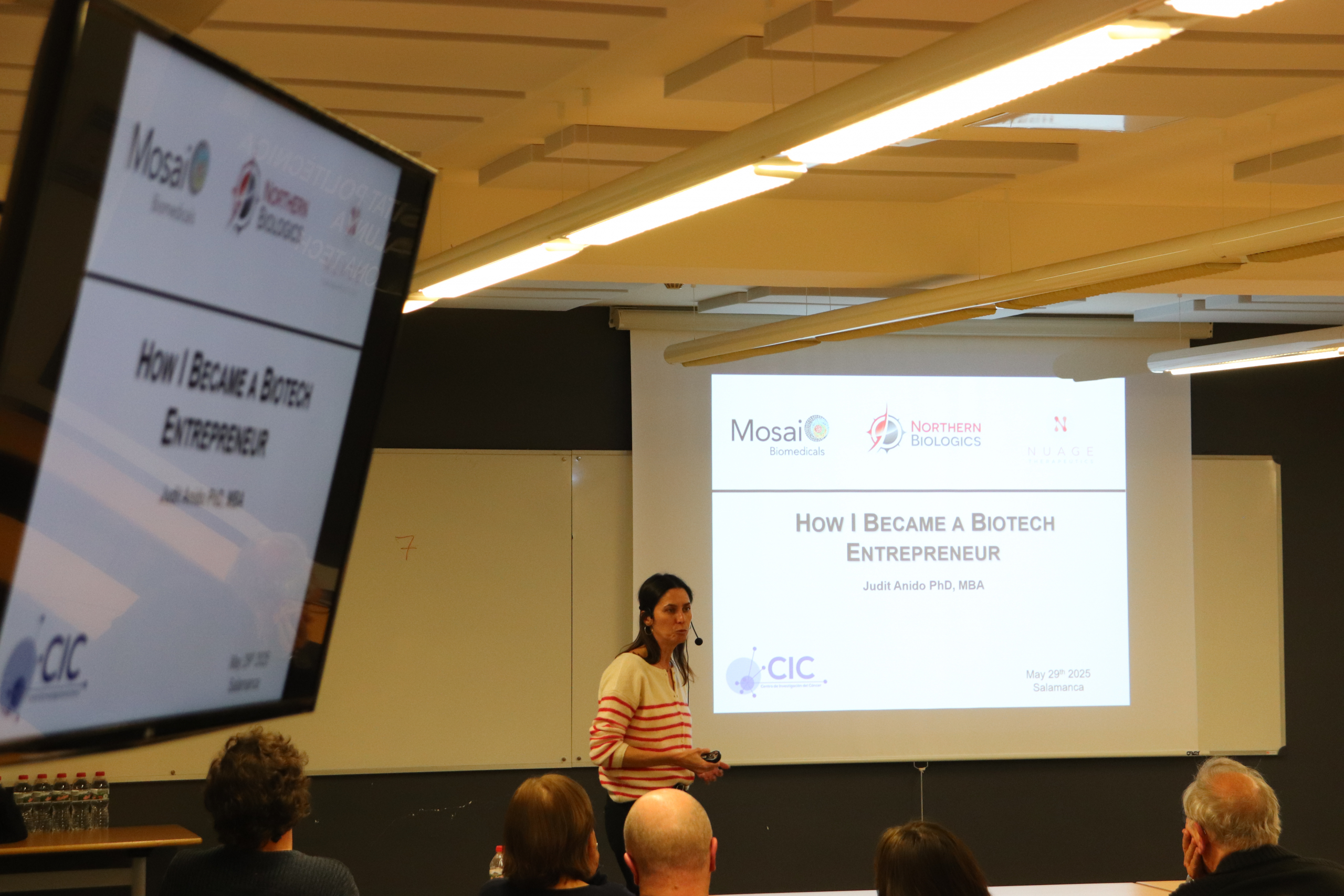
The IQAC Annual Symposium also had Judit Anido (CSO of Iteria Biopharma) as an invited speaker, talking about entrepreneurship in knowledge transfer as a career after the doctorate.
Once again, IQAC Annual Symposium provided an excellent opportunity to learn about the recent work of the institute’s research groups. The event highlighted the institute’s diversity of projects and their potential impact on science and society.