The Institute of Advanced Chemistry of Catalonia (IQAC-CSIC) and the Institute of Environmental Assessment and Water Research (IDAEA-CSIC) welcomed an international delegation from the Stanford LEAD programme, run by Stanford University Graduate School of Business, on Friday 9 October.
The visit took place as part of the Stanford LEAD Innovation Tour in Barcelona, held from 7 to 9 October. This annual initiative, organised by the Stanford LEAD community, aims to explore innovation ecosystems across Barcelona and Catalonia, connect with entrepreneurs and ecosystem leaders, identify new opportunities for collaboration and build international networks.
IDAEA and IQAC hosted the Science and Health Technologies track, bringing together 29 international professionals to strengthen links with the CSIC scientific and innovation ecosystem. Attendees included specialists in innovation, commercial strategy and business development from multinational technology, financial and industrial companies such as Google, Boeing, Salesforce, Stellantis, ING, SAP and NetApp.
Technology transfer and connections with the market
Following the official welcome by Olga López, Director of IQAC-CSIC, and Alejandro Vázquez, representing Stanford LEAD, participants had the opportunity to discover some of the CSIC-developed technologies with the greatest potential for transfer to industry and society.
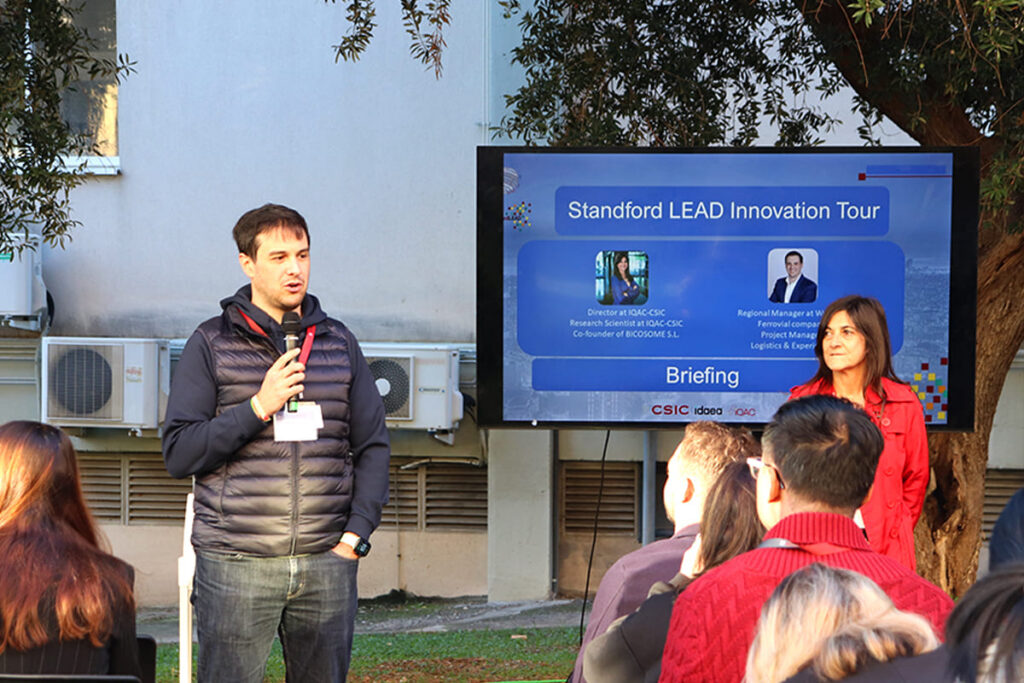
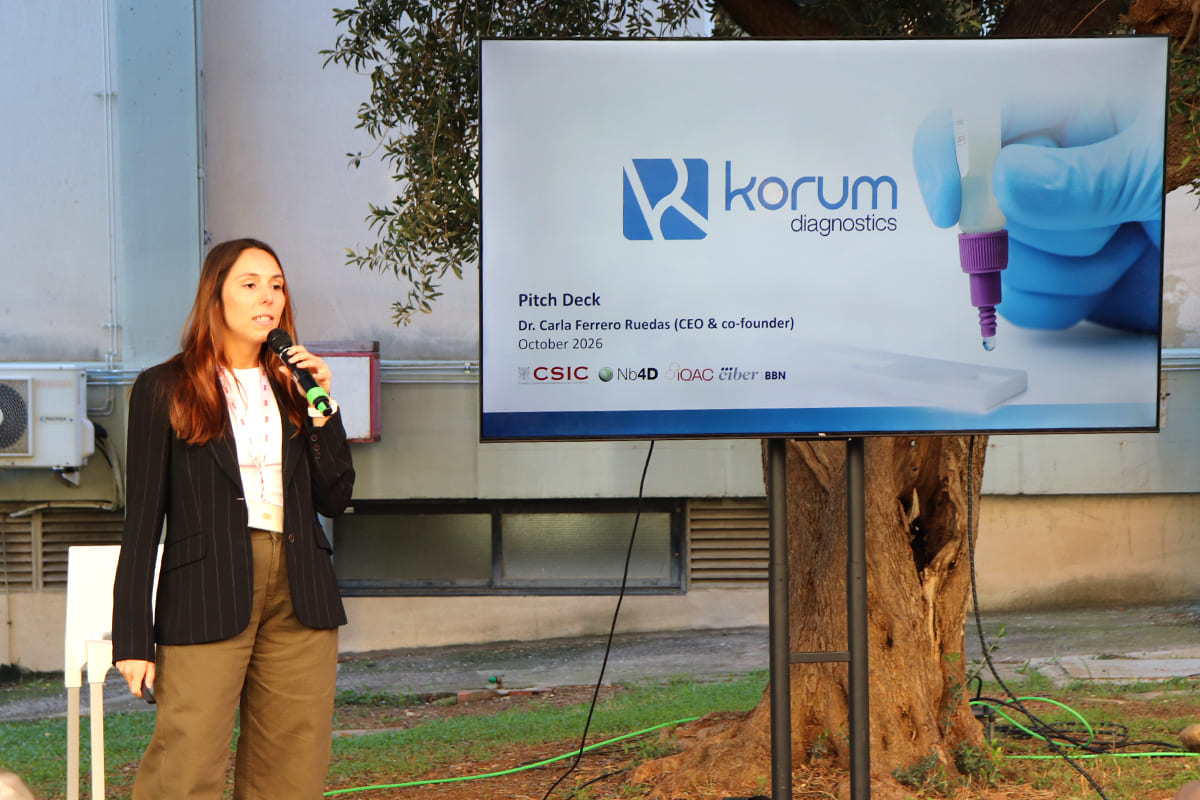
Through a series of short research pitches and laboratory tours, IQAC entrepreneurs presented advanced healthcare solutions, ranging from rapid diagnostics for bacterial infections (Carla Ferrero) and photopharmaceuticals for the treatment of glaucoma (Anna Llebaria) to immune-system-based therapies against cancer (María Edwards). Meanwhile, IDAEA entrepreneurs showcased behavioural analysis in aquatic models for drug discovery (Sergi Pujol), environmental technologies for monitoring pharmaceuticals and other organic contaminants in water (Evgeny Bulatov), and technologies for removing these pollutants (Sílvia Lacorte).
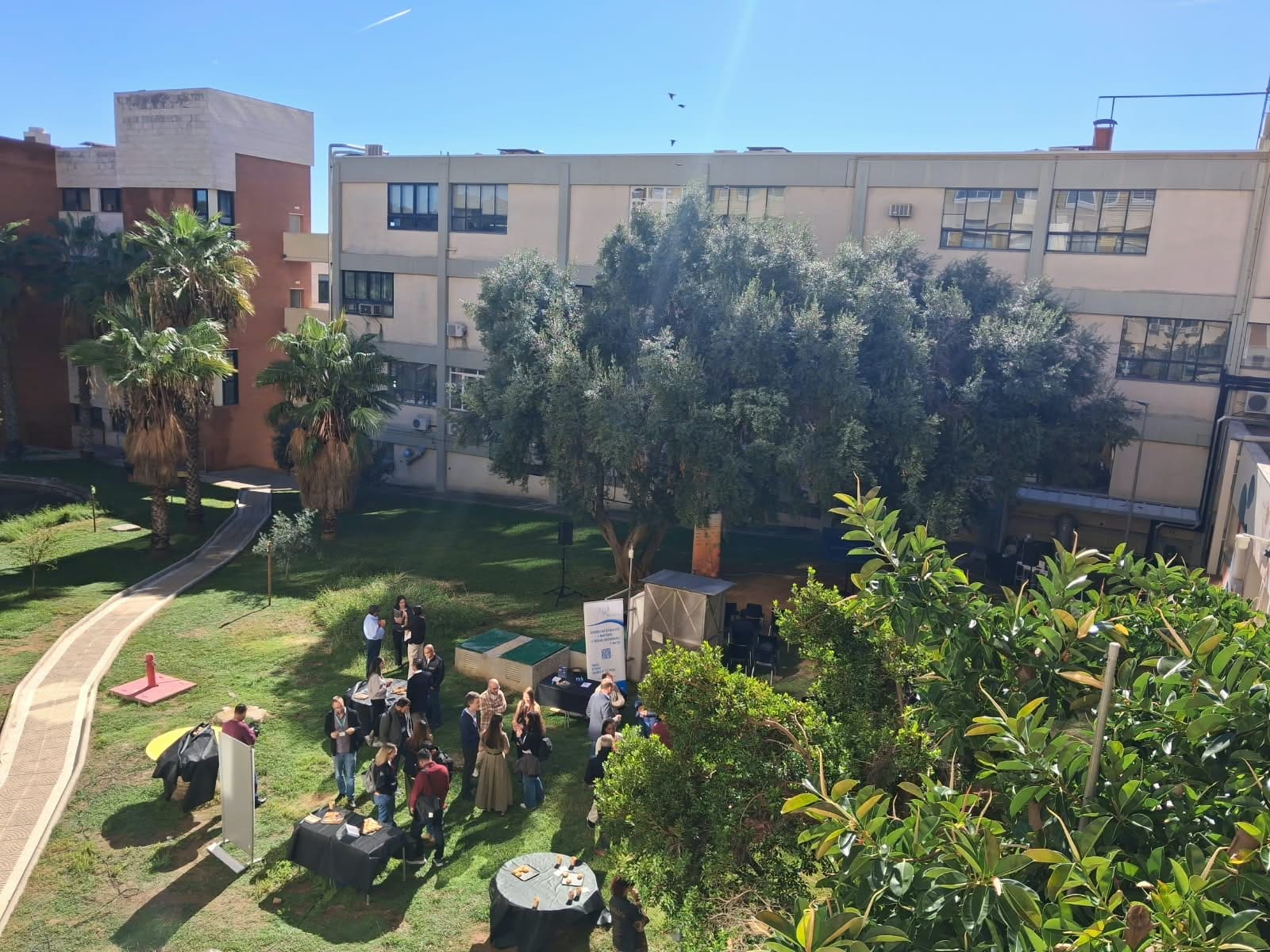
The garden provided an excellent setting for networking among entrepreneurs, researchers and invited professionals, creating opportunities to build new connections and explore future collaborations.
The morning continued with a session led by Hannah Tribe and Gabriela Irrazábal, researchers at RMIT University, on how co-creation in clinical trials can help innovators develop healthcare solutions that people genuinely trust, accept and use.
From the laboratory to clinical practice: the need for a Proof of System
The event concluded with a round-table discussion entitled “Proof of System: How Barcelona Moves Healthcare Innovation From Pilot to Practice”, moderated by Andreea Rasoga (NXP Semiconductors).
The panel featured Laura M. Lechuga (ICN2-CSIC; research), Joan Adan (InBrain Neuroelectronics; technology pioneer), Eva Manrique (Barcelona Health Hub; scaling up) and César Velasco (AstraZeneca; industry). They discussed why many healthcare innovations struggle to progress beyond the pilot stage.
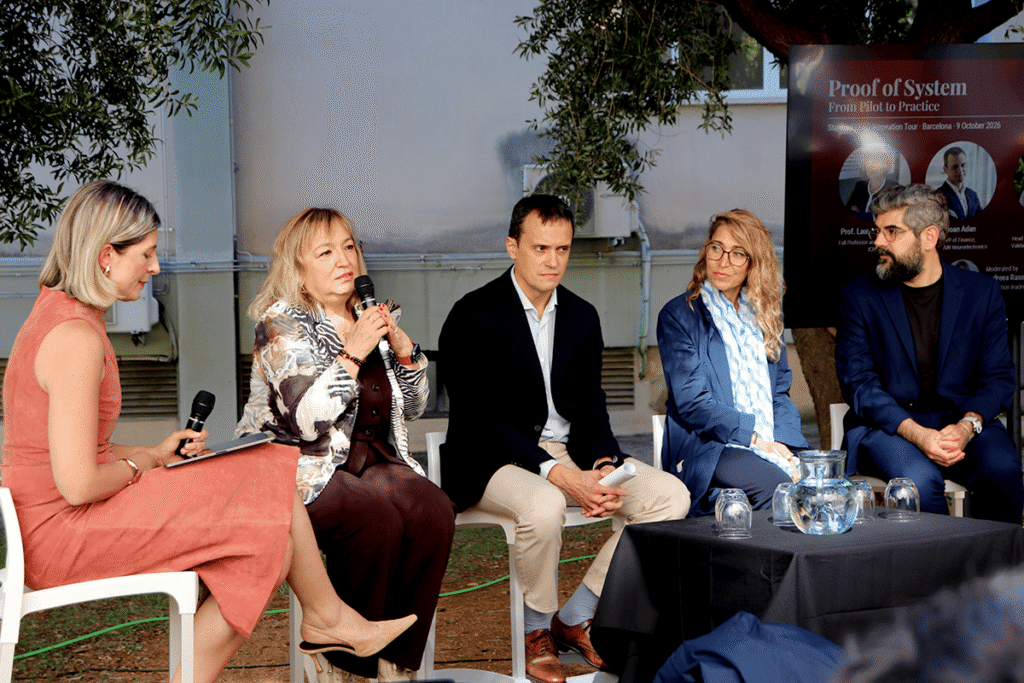
The panel’s main conclusion was that, in healthcare, a proof of concept is not enough without a corresponding proof of system. In other words, it is essential to demonstrate that a technology is viable in a real hospital environment, fits within its budget and can be integrated into clinical workflows while complying with strict European regulations.
The speakers agreed that the main obstacles are rarely technological. Instead, they tend to lie in implementation, production scalability and the relative lack of private venture capital in Europe compared with the United States. Nevertheless, the discussion ended on an optimistic note about Barcelona, highlighting its strong collaborative ecosystem connecting researchers and healthcare professionals, its position as a hub for AI and digital health, and its extensive track record in European Research Council (ERC) grants. “With open innovation calls, Barcelona is well positioned to close the gap with the US and China, thanks to its network of start-ups and corporate centres that can accelerate the introduction of new technologies into clinical trials”, the panellists concluded.