

The “Josep Carilla” Thermal Analysis and Calorimetry (TAC) Service offers its services to IQAC groups, other CSIC institutes, university and research center groups, and R departments of companies from various sectors. The service provides the following techniques:
Analysis results can be accompanied by a technical report upon request from the applicant.
It analyzes the difference in heat flow between a sample and a reference while they are subjected to a temperature program.
Applications: The technique is widely used in a variety of applications, both for quality control and as a research tool. DSC is commonly used in the pharmaceutical, polymer, cosmetic, textile, and food industries. This technique can be employed for the following determinations:
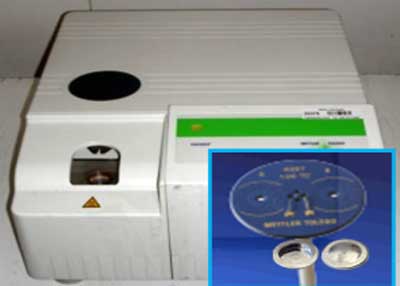
Temperature range: -150 -500 ⁰C
Gases: nitrogen and oxygen
Temperature range: 30 -500 ⁰C
Gases: nitrogen and oxygen
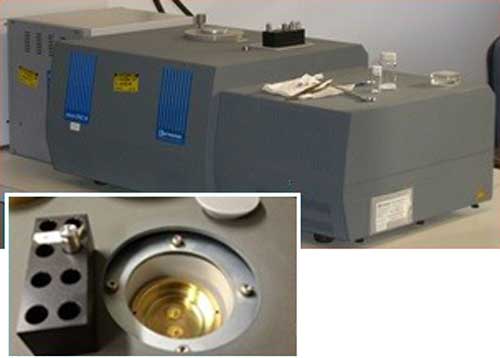
Temperature range: 0-120 ⁰C
(Suitable for low energy events. Solid samples and dilute solutions)
The change in weight of a sample is monitored while it is heated or held at a constant temperature in a specific atmosphere. Changes in mass are used to detect chemical or physical processes.
Applications: The technique is commonly used to study the stability or composition of a material. Application areas include: medicine/pharmaceuticals, environment/recycling, chemistry/plastics, agriculture, food, glass/ceramics. The TGA technique can be used for the following determinations:
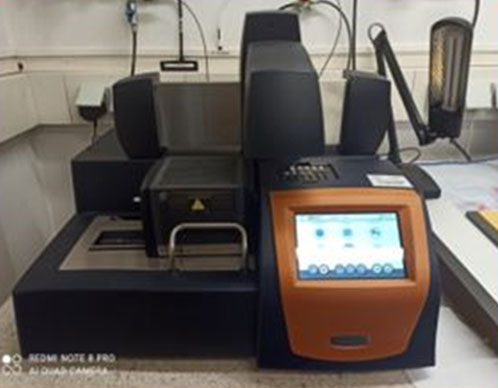
Temperature range: Amb. T – 1200 ⁰C
Gases: nitrogen and oxygen
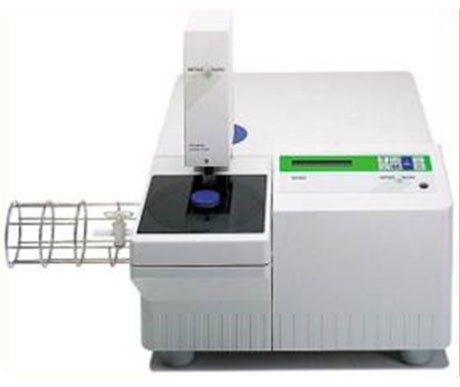
Temperature range: Amb. T – 900 ⁰C
Gases: nitrogen and oxygen
The change in weight of a sample is monitored at a given temperature while subjected to varying humidity conditions.
Applications: Determining the effect of exposure to controlled temperature and humidity conditions is a valuable tool for a wide range of materials: pharmaceuticals, fine chemicals, polymers, fibers, food, agricultural products, building materials, and porous materials. The DVS technique can be used for the following determinations:
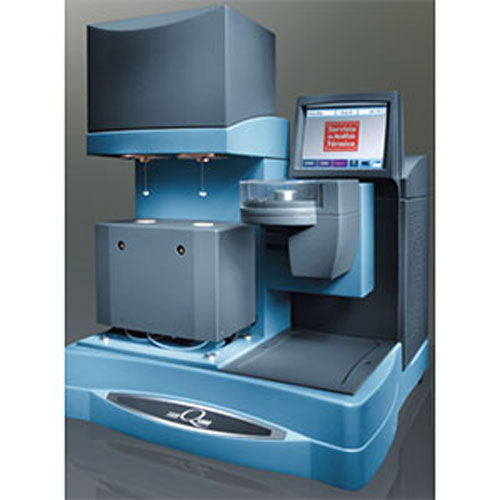
Q5000 SA (TA Instruments)
Temperature range: 5-85 ⁰C
RH range: 0-98%
Gas: nitrogen
TMA determines the dimensional changes of a sample as a function of temperature and applied force.
This technique allows the study of the behavior of various materials such as thermoplastics, thermosets, elastomers, adhesives and coatings, films and fibers, metals, ceramics, and composites. Application areas include: plastics, coatings and adhesives, electronics industry, pharmaceuticals, or textile industry. The TMA technique can be used for the following determinations:
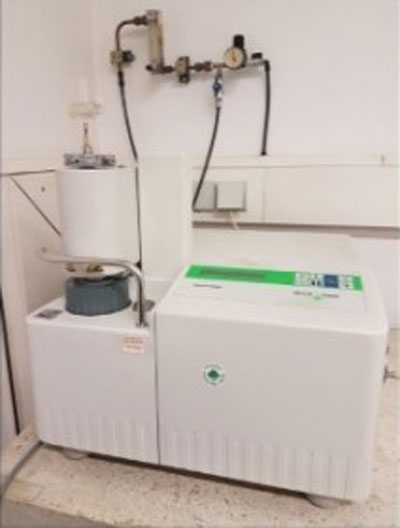
TMA/SDTA (840, Mettler Toledo)
Temperature range: Amb. T – 1100 ⁰C
Force range: -0.1 to 1.0 N in 0.0013 N increments
Gas: Nitrogen
The sample holder and probe depend on the type of sample and the application. Different accessories allow measurements on solid samples, foams, films, and fibers.
