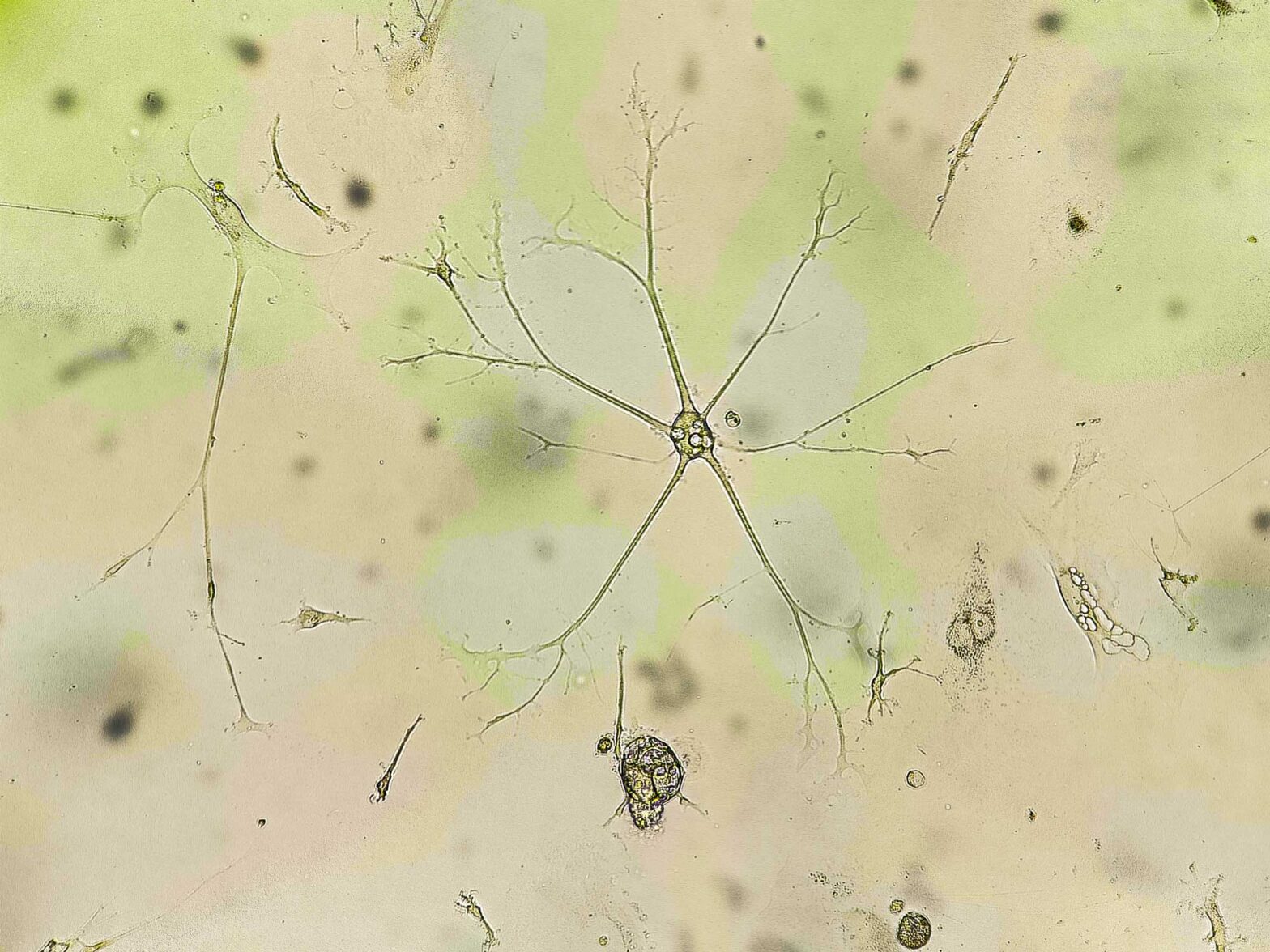
Our peptide-drug conjugate, “Mactide-V”, reprograms tumor-promoting macrophages, transforming them into tumor-fighting macrophages and stimulating an immune response.
In murine models, Mactide-V treatment slowed primary tumor growth, prevented lung metastases, and increased phagocytic/antigen-presenting macrophages, natural killer (NK) cells, and cytotoxic T lymphocytes within the tumor. It demonstrated a more potent antitumor effect than anti-PD-1 alone, without causing liver or kidney toxicity or systemic inflammation. Furthermore, Mactide can be administered orally.
In the proof-of-concept project, we will advance the preclinical validation of Mactide-V in breast cancer in mice and evaluate its clinical potential using patient samples.
ReachGLIO aims to improve glioblastoma therapy by combining blood–brain barrier opening strategies with targeted, drug-loaded nanoparticles. The project evaluates SNGR‑TNF (a stable derivative of NGR‑TNF) alongside standard chemotherapy and selects nanomedicines designed to penetrate the tumour and reach cancer stem cells. Candidate formulations are tested in advanced BBB/BTB models and 3D glioblastoma models, and then validated in mouse models and in spontaneous gliomas in dogs. Raman spectroscopy-based imaging makes it possible to track drug distribution and release, generating preclinical evidence to accelerate clinical translation.
Approximately 1,350 new cases of glioblastoma (GBM) are diagnosed per year in Spain. The standard treatment, consisting of radiotherapy and temozolomide, is very ineffective. Immunotherapy with antibodies against PD1/L1 or CTLA4 has also not yielded good results.
Photodynamic therapy is a promising approach to treat GBM, but currently there are no ligands that can effectively transport photosensitizers to GBM. In this project we use guide peptides identified by us to transport photosensitizers to selected populations of interest within GBM.
The objective is to generate immunogenic cell death, using conjugates of a specific peptide for the SNAP25 protein, a new therapeutic target that we have identified.
This is combined with the reversal of immunosuppression by reprogramming anti-inflammatory macrophages/microglia using Mactide-V. Our hypothesis is that by attacking GBM on these two fronts, a durable antitumor immunity will be activated.
Bladder cancer is a prevalent disease with low survival rates. A major limitation of current therapeutic approaches is the lack of spatiotemporal control of drugs; chemotherapy can also affect healthy tissues, causing toxic effects in patients and reducing the dose that can be used. Photopharmacology is an emerging field that seeks to precisely control the effect of drugs using external light. OncoLight proposes that these light-sensitive molecules can be used to eliminate bladder cancer cells with high precision under external light control. To establish a proof of concept, we developed light-sensitive molecules for three different target proteins.
We developed new synthetic methodologies and will establish new enzymatic assays and, if successful, these results will support the use of photosensitive drugs to treat bladder cancer in a much safer and more effective way than current therapeutic options.
NANOSHAPE focuses on the development and evaluation of nanofibres for cancer drug delivery. Novel nanomaterials, such as nanofibres, will be used for their unique shape, modularity, flexibility and responsiveness. Nanofibres could improve drug delivery for cancer treatment, particularly in terms of increased selectivity and overcoming biological barriers. Advanced optical microscopy techniques will be employed to assess the performance of the nanomaterials, emphasising the need for robust characterisation at the single-particle level. NANOSHAPE will address the importance of understanding the behaviour of nanomedicines in complex biological environments by using more realistic in vitro models, such as organ-on-a-chip technology, to study their transport across different barriers. In addition, NANOSHAPE will explore strategies for drug loading and release, including incorporating anticancer drugs into nanofibres and using stimulus-responsive mechanisms for controlled drug release.
MELINA drives an AI platform in nanomedicine that combines curated data, standardized experimental workflows, and advanced machine learning models to optimize therapeutic nanoparticles. The project integrates information on nanoparticle synthesis, physicochemical characterization, and biological evaluation in cellular models to identify which variables most influence efficacy and safety. It also incorporates high-throughput methods, image analysis, and Quality by Design strategies to guide the development of new formulations in a more systematic and reproducible manner. By reducing trial-and-error and sharing data and tools openly, MELINA aims to accelerate innovation in nanomedicine and strengthen translational research.
The MCS-CANMOVE project aims to develop two new therapeutic agents: bivalent ligands for the treatment of movement disorders, such as levodopa-induced dyskinesia (LID) and restless legs syndrome (RLS), and drug delivery systems for the treatment of cancers, such as metastatic colorectal cancer (mCRC) and triple-negative breast cancer (TNBC). In both cases, a controlled multivalent strategy will be employed to improve selectivity and efficacy. LID and RLS are clinically challenging to treat, and current therapeutic solutions present undesirable side effects. Bivalent ligands will selectively and simultaneously modulate receptor dimers involved in the development of these diseases, thereby minimizing side effects. TNBC and mCRC share characteristics such as poor prognosis, metastasis, and chemoresistance. The proposed drug delivery systems are designed to selectively eradicate tumors and cancer stem cells, creating more effective therapies with fewer side effects.
Cancer stem cells (CSCs) are often responsible for relapses, and one of their survival mechanisms is autophagy. However, despite the potential of autophagy inhibitors to eliminate CSCs, their effects on healthy cells hinder their clinical advancement.
Photopharmacology seeks to control the activity of bioactive molecules with external light, localizing drug activity in space and time. We believe that photosensitive molecules targeting CSCs could effectively eliminate them without causing side effects, increasing the efficacy and safety of anti-CSC drugs.
In this project, funded by the Spanish Association Against Cancer (AECC) within Ideas Semilla, we are (1) establishing the first in vivo proof of concept on the use of light-activatable irreversible autophagy inhibitors, and (2) developing the first ULK1 inhibitors that reversibly block autophagy only under illumination.
Aggressive breast cancers often resist standard therapies due to mechanisms related to both tumour cells and the tumour microenvironment. Many chemotherapeutic drugs increase ceramides, lipids that promote cell death. CERT, a protein involved in ceramide transport, reduces their accumulation; therefore, lowering CERT levels could increase sensitivity to chemotherapy by raising ceramide levels and improving the therapeutic response. This project investigates CERT’s role in treatment resistance and develops new degraders capable of directing CERT directly to the proteasome via Usp14, without relying on E3 ligases. The molecules developed have been validated through chemical synthesis, biochemical characterisation and studies in breast cancer models, providing evidence that CERT is a promising therapeutic target.
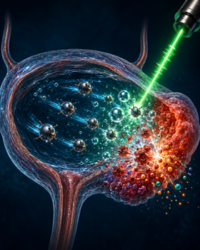
BubblyBots4BC aims to develop a novel immunotherapy for bladder cancer using urease-powered iron oxide nanobots combined with pulsed laser irradiation. Following intravesical administration, the nanobots are designed to self-propel, distribute within the bladder, and preferentially accumulate in tumor tissue. Upon laser activation, they generate vapor nanobubbles that mechanically damage cancer cells and induce immunogenic cell death, promoting the release of danger signals and dendritic cell activation. The project will optimize synthesis, motion, irradiation conditions, immune activation, tumor accumulation, and therapeutic efficacy in bladder cancer models.
Manage Cookie Consent
To provide the best experiences, we use technologies like cookies to store and/or access device information. Consenting to these technologies will allow us to process data such as browsing behavior or unique IDs on this site. Not consenting or withdrawing consent, may adversely affect certain features and functions.
Functional
Always active
The technical storage or access is strictly necessary for the legitimate purpose of enabling the use of a specific service explicitly requested by the subscriber or user, or for the sole purpose of carrying out the transmission of a communication over an electronic communications network.
Preferences
The technical storage or access is necessary for the legitimate purpose of storing preferences that are not requested by the subscriber or user.
Statistics
Storage or technical access that is used exclusively for statistical purposes.The technical storage or access that is used exclusively for anonymous statistical purposes. Without a subpoena, voluntary compliance on the part of your Internet Service Provider, or additional records from a third party, information stored or retrieved for this purpose alone cannot usually be used to identify you.
Marketing
The technical storage or access is required to create user profiles to send advertising, or to track the user on a website or across several websites for similar marketing purposes.